Saturday, 15 July 2017

Representation Theory

Gramsic's Hegemony:
Representation is unequal. Dominant ideology is represented the most and therefore that's what people are likely to believe.

Stan Cohen- Moral Panic:
Cultures are subject to Moral Panic when a group of people become defined as a threat to societal values or interests.

Society would see an innocent Asian man a threat to society because of the stuff that's currently going on in the world e.g. ISIS attacks and bombings on trains, this links to Stan Cohen's theory of moral panic 


Gary Giddens:
Claims that mediated experiences make us reflect upon and rethink our own self-narrative in relationship to others.


Gauntlett:
Media messages are diverse, diffuse and contradictory. Rather than being zapped straight into people's brains, ideas about lifestyle and identity that appear in the media are resources which individuals use to think through their sense of self modes and expressions.

Berger:
"Men look, women appear"
Women are there solely for the objectification of men.

bell hooks:
Skin colour is a code; lighter skinned women are considered more desirable and fit better into the western ideology of beauty. Black women are objectified and sexualised in hip-hop reflecting the colonialist view of black women.

Tessa Perkins- Stereotypes:
Stereotypes are assumptions we make based on groups of people:
Not always negative. e.g. white people are stereotyped to be the richest race, that's not bad.
Not always minority groups.
Can be held about own group.
Can change. e.g. nerds seen as uncool, but now some people see it as a style
Not always false. e.g. there is always an element of truth

Richard Dyer- Stereotypes:
Stereotypes are always about power; those with power stereotype those with less power.

Monday, 10 July 2017

Inspire - Textual Ananlysis

In the short film 'Inspire' through the use of the four micro elements as well as the macro elements Gramsci's Hegemony which states that representation is unequal and as a result dominant ideology is represented and therefore this is what most of the viewers believe. This can be seen through the narrative structure of the text as typical stereotypes of the different ethnicities are shown and you would not notice that they go against the typical dominant theory until you listen to the voiceover which is a direct address to the audience which states what is wrong with the representations. The voiceover is trying to portray to the audience that the typical stereotypes shown need to be disregarded by the society and therefore is going against Gramsci's theory as it asking the audience questions about the dominant theory.

Tessa Perkin's theory can be seen through the mise en scene in 'Inspire' as stereotypes are not always false and they are not always negative. This can be identified through the use of clothing as the clothing is all very stereotypical to the typical representations seen within the media. The Sikh family who are wearing turbans is a stereotype of this specific group, however does not actually create a negative or false representation. Furthermore Richard Dyers stereotypes theory that "stereotypes are always about power; those with power stereotype those without power" is depicted in the mise en scene due to the use of the Daily Mail website in order to highlight to the audience that national newspapers create stereotypes about people which are fed to the public as they have the power in order to do so. Without the public attention of these stereotypes created by newspapers it could be argued that it is not a true sterotype just a common one, shown through the man stereotyped as a 'terrorist' actually being a genuinely helpful man. This therefore links to Stan Cohens theory of moral panic as society is frightened due to a group being stereotyped to be causing a threat to societal values or interests.

Additionally, Bergers theory that wherever men look, women appear- thus meaning women are solely used for the objectification of men (very much similar to Laura Mulvey's male gaze theory) is represented through the camera angles and movement in the short film. Through the use of a close up shot of the homeless woman in which a male is placed behind her in the frame looking at her in an objectifying manor, this theory creates the representation that women are solely used in order to be an object for the males.


bella hooks theory of skin colour being a code is also depicted through the use of editing in the short film as the whole narrative is based around one specific woman of Indian face and therefore shows her struggle. It also focuses on many other minority groups through the continuity editing between characters and portrays their stories to be very similar to the Indian woman as they are all shown to have some sort of struggle in their life that they are stereotyped to as their skin colour is a code for this specific stereotype.

In conclusion, Giddens and Gauntlets theory that experiences make us reflect on our self-narrative in relations to others and are used as a mode of expression can be seen through all of the micro elements, as well as the narrative structure as the whole purpose of the short film was to make the audience reflect on all of the questions asked throughout the text and is therefore changing the audiences perspective of the world around them.

Wednesday, 5 July 2017

Narrative Theory

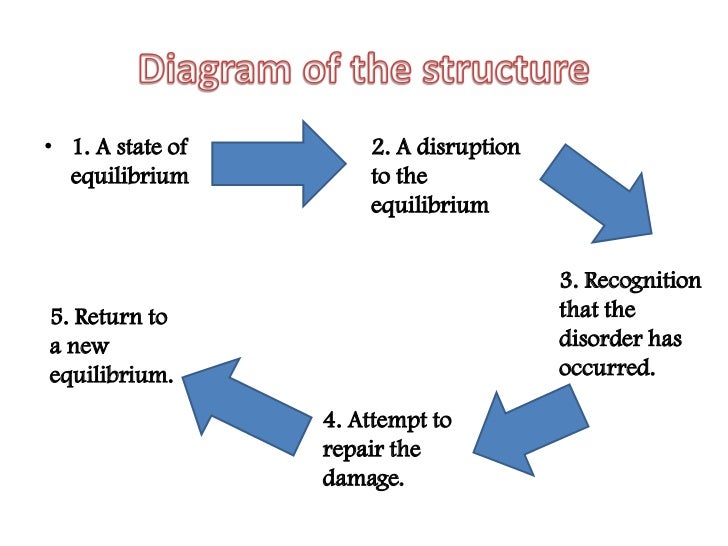
Todorov's equilibrium:
Linear narrative- A narrative which includes a beginning, a middle and an end. It follows the structure of past to present to future.
Nonlinear narrative- A narrative that does not always start at the beginning. Usually these type of films jump around the timeline in which events in the story happen.

Narrative theory- Todorov's equilibrium 


   Image result for todorov theory
However, sometimes horror films use a technique called reverse chronology. This means that the plot is revealed backwards to it normal sequence. This means that the first scene is the end of the narrative. 


Barthes' theory of narrative:
Text's need to be unravelled and because of this can have several meanings.
Barthes' theory also states that narratives can be open and closed. Open narratives can be unravelled to have several meanings which are not explicity shown, where as closed narratives show the one ending and there is no other alternative.
Enigma code-  A question which is proposed to the audience at the start of the text and is later answered. These questions allow the audience to be more intrigued in the film.


Bordwell and Thompson:
Narrative consists of chain of events in a cause relationship. (Every effect in a film has a cause).

Genre Theory

Barry Keith Grant's theory - Suggests that sub genres are used as more specific categories and allow audiences to identify and recognise them.

Steve Neal - Genres are instances of repetition and differences.

tick tock - textual analysis


Sound The short film has a closed narrative, as theorised by Barthes, as the meaning is clear and resolved at the end. Barthes also theorised that an enigma code is crucial in engaging an audience in a narrative which was created through the use of sound. In the short film the sound creates an enigma as the non diegetic soundtrack creates a sound which could be associated with an intense heartbeat. The connotations of a heartbeat link to the narrative as the protagonist is clearly scared about the prospect of dying and therefore means the audience understand his fear better. Furthermore, the synchronous sound which is used in the short film furthers that the audience can sense the far as the non diegetic soundtrack heightens when the man begins running due to his fear of death. Without the use of this synchronous sound the narrative would be hard to depict as the narrative would lack depth ; thus it would appear that the man is running for no apparent reason.

Editing Todorov's theory of equilibrium was not evident in the short film Tick Tock as it didn't follow a conventional, linear story arc. Instead, a reverse chronological narrative was established through the use of editing. The editing technique of the long take emblematizes the narrative as it portrays that the protagonist has very little time to think. Due to there being a lack of/no cuts the audience identify that the man's Adrenalin has kicked in and therefore the drama is intensified. Due to the narrative all running in reverse as well we get to see every decision the protagonist makes during this time of panic as the long take means that nothing it omitted. Furthermore, the technique of the fast paced editing betokens the protagonist in the short film Tick Tock as he is seen rushing and determined to carry out the tasks he needs to do before he 'dies'. Due to the non-stop action,which is constant due to the fast pace, the audience depict the man has little if any time left and therefore is driving the narrative forward through symbolising the panic in the protagonists life in which he wants to get things done.

Mise-en-scene

Bordwell and Thompson state that a narrative is the product of a cause and effect relationship, and this can be seen through the use of key props used in the mise en scene.This emerges when the character takes the pill which ultimately has a knock on effect for the rest of the narrative, due to it making him believe he is about to die. This prop is a quintessential part if the short film as it drives the narrative. The prop box is also used in a similar way as it also helps to further the narrative and also links to Todorov's theory of creation of new equilibrium as the man comes to a realisation that he needs to give this box to his girlfriend in order to fulfil what he wants to do in his life before his 'death'.  

The mise-en-scene is further used to drive the narrative of the short film as the clock which is used symbolises the whole reason for the narrative. The clock is used as an indexical sign for the lack of time the boy has due to taking the pills, but is also used in a very clever way in order to symbolise that the boy has a chance to restart his life and make a fresh start as throughout the film the clock is going backwards right up until the last shot when the clock begins to go forward again. This therefore may show that the due to the boy coming so close to thinking his death was occurring he has decided to make a change due to thinking about what he has done wrong in his life.

Camera movement and angles

Levi Strauss’ Binary Oppositions states you need to have opposites to build a story. Eg. good vs evil, right vs wrong, known vs unknown, however this is not depicted in the narrative through camerawork and movement because the camerawork means that everything is done in reverse order and therefore everything is known to the audience from the start and there is nothing unknown. The only reason the audience can ultimately determine that there is something wrong in the narrative is due to the handheld camera which makes the scene unsteady and thus creates a disequilibrium and also contributes to the continuity of the scene so that there aren't as many cuts.

Furthermore, a low angle shot is used to help the audience identify the main element of the narrative due to the shot looking up at the box which the boy is trying to deliver to his girlfriend when faced with his potential death. Due to the low angle shot being used it makes the box look powerful and is therefore symbolising that the relationship between the boyfriend and girlfriend means a great deal to the boyfriend and this is why he can be seen running to her.

Short Film - Final